
The Anatomy of a VIN: What Exactly Does a VIN Decoder Do?
For the average driver, a Vehicle Identification Number (VIN) is just a string of 17 confusing characters stamped on the dashboard. But for an auto glass professional, that string of characters is a DNA sequence.
In an era where a single model year can have five different windshield variations, guessing is no longer an option. This is where a VIN Decoder comes in. But what exactly is it "decoding," and why is it the backbone of a profitable shop?
What is a VIN?
Standardized in 1981, the 17-character VIN is a unique identifier for every vehicle on the road. It isn't random; it is a coded summary of the vehicle’s entire build sheet. A VIN decoder is a software tool that "translates" these alphanumeric codes into plain English specifications.
Breaking Down the Anatomy: The 17 Digits
To understand what a decoder does, you have to look at the three main sections of the VIN:
1. World Manufacturer Identifier (Digits 1-3)
The first three characters tell you where the car was made and who made it.
● Digit 1: The country of origin (e.g., 1, 4, or 5 for the USA; J for Japan).
● Digit 2 & 3: The specific manufacturer and division (e.g., Ford, Chevrolet, or BMW).
2. Vehicle Descriptor Section (Digits 4-8)
This is the "meat" of the VIN for glass shops. These digits describe the vehicle's specific attributes:
● Model and Body Style: Is it a 2-door coupe or a 4-door sedan?
● Engine Type: Crucial for weight and performance specs.
● Safety Features: This section often hints at the presence of airbags and early-generation safety sensors.
3. The Check Digit (Digit 9)
This is a mathematical "security key." A decoder uses a complex formula to verify that the VIN is real and hasn't been tampered with. If the math doesn't add up, the decoder flags the VIN as invalid.
4. Vehicle Identifier Section (Digits 10-17)
● Digit 10 (The Year): This is vital. A "G" might represent 1986, while a "T" represents 1996. A decoder ensures you don’t order glass for a 2018 model when the car is actually a 2019.
● Digit 11: The specific assembly plant.
● Digits 12-17: The unique production sequence (Serial Number).
What Information Does a VIN Decoder Actually Provide?
When you run a VIN through a professional-grade decoder like the one integrated into APAI, you aren't just getting the year, make, and model. You are getting the hidden specs that dictate your profit:
● ADAS Features: Does the vehicle have Lane Departure Warning? Rain sensors? A heads-up display (HUD)? A decoder identifies these features so you can order glass with the correct brackets and camera frit.
● Glass Specifics: It identifies acoustic interlayers or solar-tinted glass options that are often invisible to the naked eye but required for a proper replacement.
● NAGS Part Matching: A high-level decoder connects the VIN data directly to the National Auto Glass Specifications (NAGS), instantly giving you the exact part number you need to order.
Why Manual Decoding is a Risk
Technicians who rely on manual lookups or "best guesses" based on the vehicle's trim level face two major risks:
Wrong Part on Site: There is nothing more expensive than driving 30 miles to a mobile job only to find the windshield doesn't have the right sensor bracket.
Liability: Installing non-acoustic glass on a vehicle that requires it—or missing an ADAS recalibration—creates safety risks and legal liability.
How APAI Simplifies the Anatomy
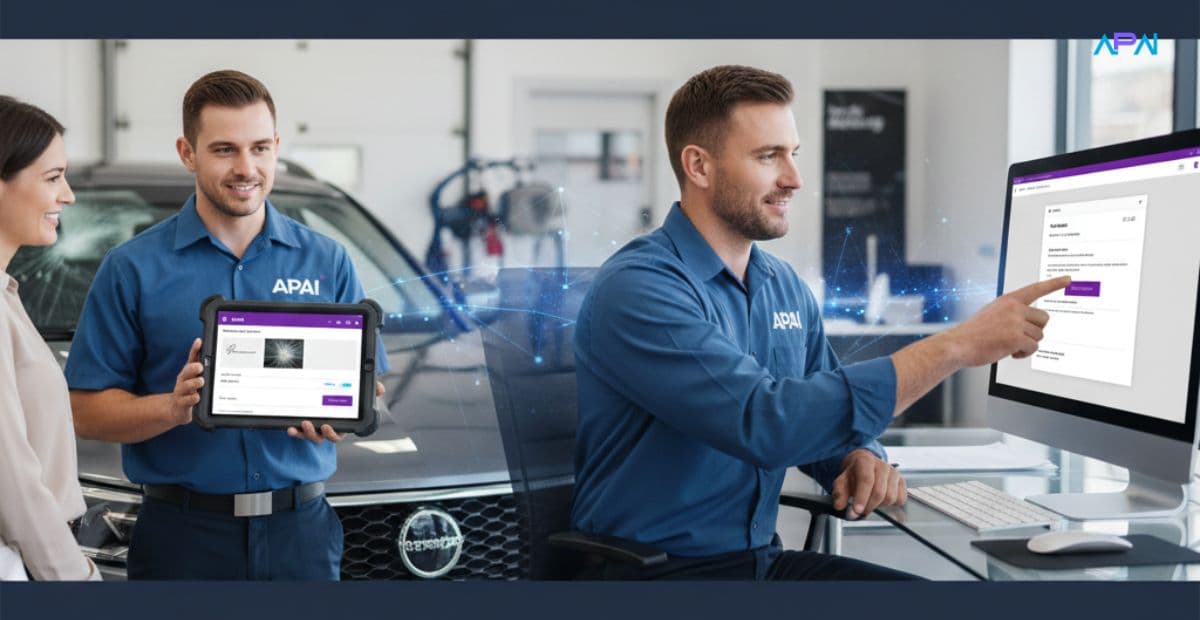
The APAI (Auto Pane AI) platform takes the complexity of VIN anatomy and makes it a one-second task. By using the APAI VIN Decoder, technicians can:
● Eliminate Typos: Scanning the barcode removes human error.
● Instant Specs: Immediately see all glass-related features and ADAS requirements.
● Direct Invoicing: The decoded data flows straight into your quote, ensuring your pricing is accurate to the penny.
Conclusion
A VIN decoder is more than a translation tool; it’s an insurance policy for your business. By understanding the anatomy of a VIN and using a powerful platform likeAPAI, you ensure that every job starts with the right part, the right price, and the right profit margin.
More Resources

The “Owner’s Freedom” Guide: Scaling Your Business Without Working More Hours

Is Your Inventory a Mystery? Modernizing Auto Glass Part Tracking with AI
Stop Bleeding Billable Hours: 5 Manual Tasks to Kill in Your Glass Shop Before 2026